A theoretical framework
for the post-photographic
image.
I work on articulating a framework for understanding authorship, intention and visual responsibility when an image can be produced without gesture, without contact, without the friction of encounter. The research unfolds across volumes and published essays, and is applied directly within the artistic practice.
Three concepts that organise the research
Three dominant accents of the contemporary image: photography as a device for capturing attention, photographic art as the deliberate exercise of intention, digital art as the orchestration of message within connected and algorithmic media.
An ontological node in which materiality, data, interface and experience are interdependent. An entity that exists simultaneously in material and digital regimes, without these dimensions being separable without loss of the object's identity.
Aura no longer belongs to the object as an intrinsic property. It emerges at the intersection of material support, digital layer and participating body, in the concrete act of activation. It does not persist outside the configuration that produces it.
The three are not separate ideas but a system: the phygital object names what the post-photographic image is, situational aura when it holds value, and the AIM triad describes the operation that links condition to value.
Theoretical construction across volumes
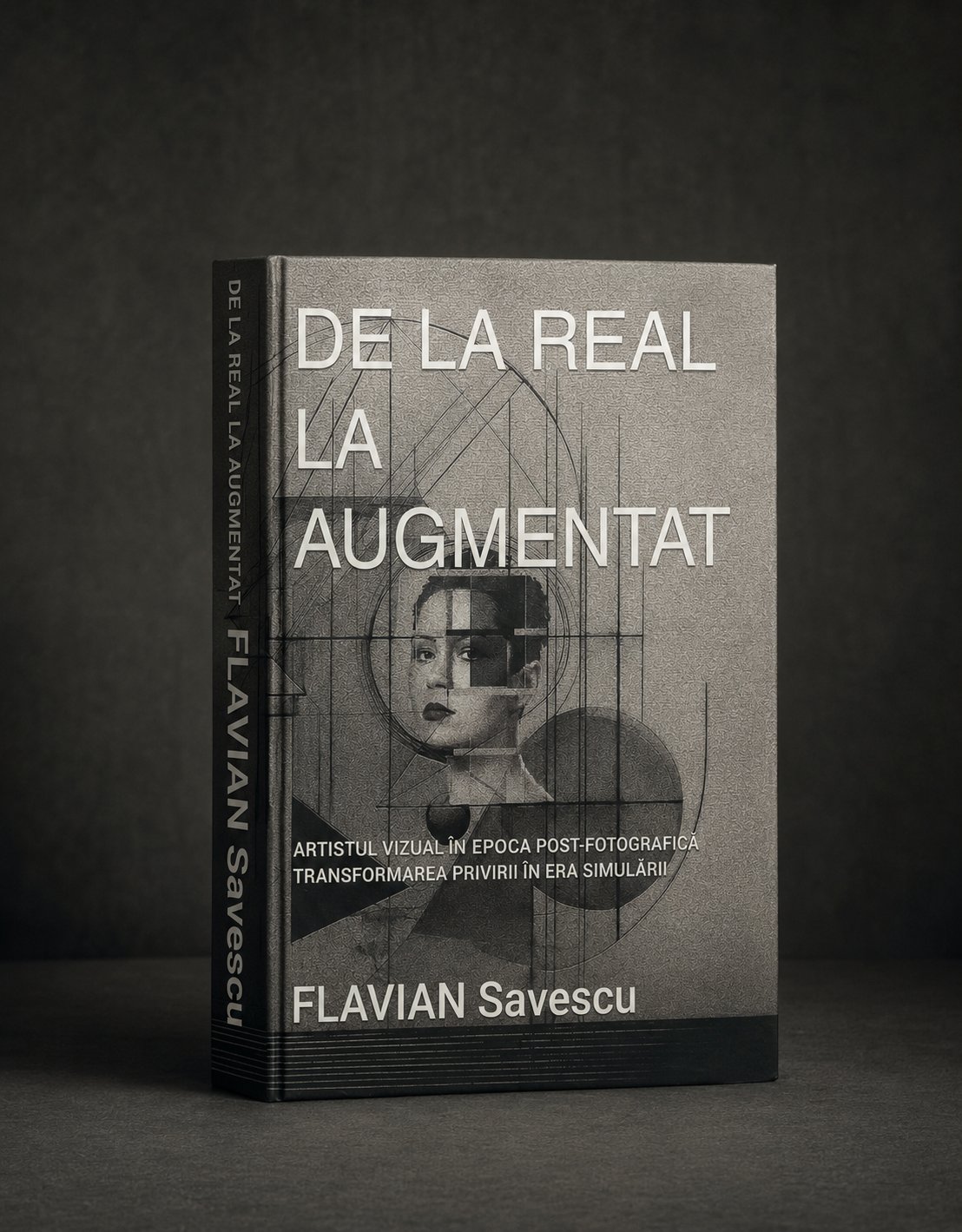
From Real to Augmented
The visual artist in the post-photographic age
Analyses the transformations of the image's status and of the visual author's role within a medium dominated by algorithms. Integrates theory, case studies and personal artistic practice. Proposes the AIM triad as an analytical instrument. Published in Romanian as De la real la augmentat; English translation forthcoming.
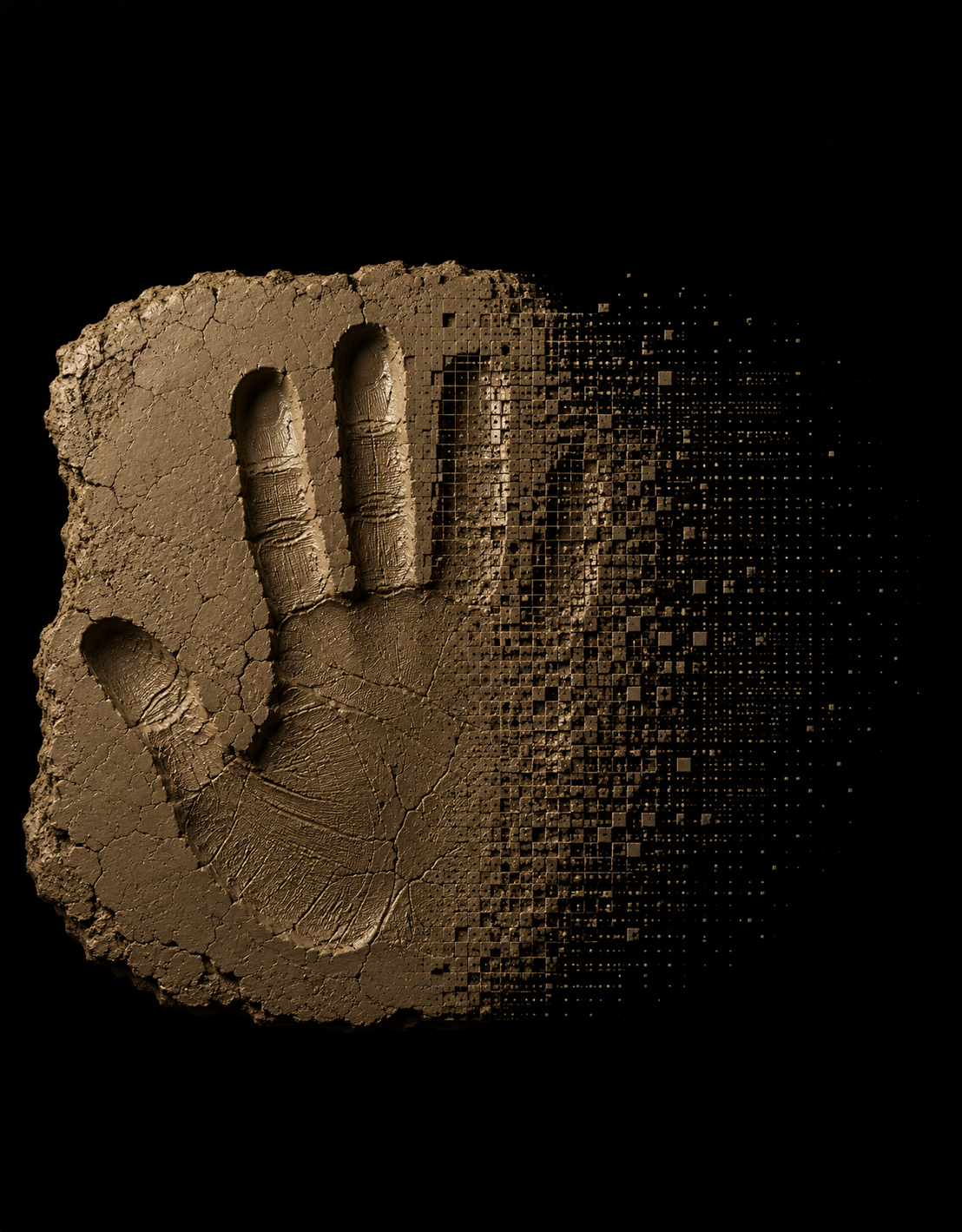
From Real to Augmented II-A
Corporality, space and materiality in post-photographic art
Extends the framework from the image as viewed to the image as lived and corporally negotiated. Articulates haptic aesthetics and somaesthetics, and introduces the concepts of situational aura and the phygital object. Recalibrates the Attention–Intention–Message triad for the phygital context.
The concepts are demonstrated analytically in The Surface of Things, a methodological intermezzo of five works on what the algorithm cannot touch: the material trace, wear, memory sedimented in its support.
Distanța focală — critical readings of Romanian photographers
Distanța focală (Focal Distance)
Permanent column of photographic criticism dedicated to Romanian practitioners of contemporary image-making. Each edition constructs a critical reading of a single photographer — not a presentation, but an interrogation: what their practice puts at stake, what photographic question they formulate, what they leave unresolved. The column's title names simultaneously an optical distance and a human one — toward the subject, toward the place photographed, toward the other.
View the column archive →Ten texts in cultural journals
The Wrong Lens
On a photographic culture obsessed with equipment — and the Gear Acquisition Syndrome that replaces the question “what do I want to say?” with “what camera should I buy?”. From conspicuous consumption and aesthetic obsolescence, through the evidence of history, to the Attention–Intention–Message triad: the tool is chosen in an afternoon of comparing spec sheets, the eye is built over years.
Read the essay →Pure physiognomy without predicate: the statistical flesh of AI portraits
The generative image is not orphaned of its referent but overwhelmed by referents. Introduces the concept of statistical flesh — the human body dissolved into probability distributions, yet still flesh through everything it produces — and recasts Barthes's ça-a-été as these-have-been.
Read the essay →The prompt as photographic gesture
A gesture that no longer has a name: not photography, since it has no referent, nor writing, since no text remains. Intentionality without a gaze, language turned into an optical instrument — and a case for a criticism proper to the prompt, borrowed neither from photography nor from literature.
Read the essay →Captured attention
Attention as the infrastructure of the present. How the authority of attention has been transferred — not by force, but by architecture — and what is concretely lost when attention as a sovereign act becomes captured attention.
Print publication · Helion no. 3–4 / 2026The gaze without referent
What becomes of the gaze when the image no longer points to a real that has been? On the detachment of the act of seeing from its referent, within the regime of the post-photographic image, where seeing no longer guarantees that something stood before the eye.
Print publication · Reflex no. 1 / 2026When the image no longer confirms the world
The shift from image as evidence to image as experience. Proposes the attention–intention–message triad as an instrument of visual critique.
Read the essay →Taste as algorithm. Captured attention and administered desire
The gradual impoverishment of the structure of cultural desire under the pressure of recommendation algorithms.
Read the essay →Intentionality without consciousness: can there be art without a subject in the AI age?
Husserl, Searle and Barthes placed in dialogue with Allen and Anadol. AI art is not art without a subject, but art in which the subject is no longer singular.
Read the essay →The ethics of AI-generated images
Transparency of process, the crisis of authorship, responsibility towards the invisible bias of generative systems.
Read the essay →Delegated imagination
What happens to human imagination when the production of visual imagination is taken over by technological systems.
Print publication · Helion no. 1–3 / 2026