Visual Education

Photography and Digital Art

Programmes dedicated to developing a critical understanding of the image, in the context of photography and new digital media.

The courses combine visual practice with theoretical reflection, offering participants tools to build a coherent and personal visual language.

COURSES

This page is dedicated to the courses I teach at the Caraș-Severin Centre for Culture and Art, as well as independently developed training programmes, aimed at promoting photography and exploring contemporary visual language.

Drawing on my artistic and pedagogical experience, I aim to offer participants not only technical knowledge, but also aesthetic and cultural reference points that stimulate creativity and support the development of their own visual voice.

These educational endeavours create a space of encounter between passion and rigour, between personal exploration and a deep understanding of the image as an art form and means of communication — integrating both traditional photographic training and new directions in technology-assisted visual creation.

photo tours
alt="Portretul unui bătrân în mijlocul unei lecții interactive"

📷 Course Programme

Duration: 2 years / 4 semesters Frequency: 2 sessions per week, each 1h30

This educational programme is designed for those interested in deepening their knowledge of photographic art, offering comprehensive training structured over four semesters. The course combines theory with practice, with an emphasis on developing a coherent artistic vision and acquiring the technical skills required of a professional photographer.

🎓 Course objectives:

  • Building a solid foundation in photographic technique: equipment use, light control, image composition
  • Familiarisation with digital editing: processing images in Adobe Lightroom and Photoshop
  • Exploring diverse photographic genres: portrait, landscape, street photography, product, black-and-white
  • Cultivating a personal visual identity and building a professional portfolio

📚 Curriculum structure:

  • Semester I: Introduction to the history of photography, fundamental technical principles, composition and light
  • Semester II: Visual language and image aesthetics, basic digital editing, narrative coherence
  • Semester III: Study of photographic styles, visual expressiveness
  • Semester IV: Developing a personal style, final project, public presentation

🎯 Final outcome: Upon completing the two years of study, participants will have acquired advanced competencies in photography, will be capable of realising complex visual projects, and will have a professional portfolio reflecting their own artistic vision. The course concludes with the presentation of an individual project — exhibition, photo book, or online platform.

alt="Compoziție vizuală ce explorează conexiunea dintre tehnologie și educație modernă"

🖼️ Course Programme

Duration: 1 year / 2 semesters Frequency: 1 session per week, each 1h30

This course is designed for photography enthusiasts who wish to refine their post-processing skills and develop a coherent visual style. Over the course of one year, participants will learn to use the most important digital editing tools effectively — including Adobe Lightroom and Photoshop, as well as free alternatives — within a structured and applied framework.

🎓 Course objectives:

  • Acquiring fundamental knowledge in corrective and creative editing
  • Mastering the digital workflow: organisation, selection, adjustments
  • Deepening intermediate and advanced retouching and composition techniques
  • Developing a personal style and building a coherent portfolio

📚 Curriculum structure:

🔵 Semester I — Fundamentals and Basic Techniques

  • Introduction to RAW files, editing software, and differences between corrective and creative editing
  • Image organisation, import, cataloguing and backup
  • Basic adjustments: exposure, contrast, clarity, composition
  • Local edits: brushes, masks, gradients
  • Colour corrections and export for web and print
  • Short project with individual feedback

🔵 Semester II — Intermediate Techniques and Personal Style

  • Retouching in Photoshop: layers, selections, correction tools
  • Black-and-white editing and special effects
  • Study of photographic styles: landscape, portrait, product, street
  • Creating presets and visual coherence
  • Individual portfolio work: 5–10 fully edited images
  • Final project presentation and guidance for online publishing

🎯 Final outcome: Upon completing the course, each participant will have mastered essential and intermediate photo editing techniques, will understand the principles of a personal visual style, and will have a professional portfolio with finished images ready for publication.

alt="Ilustrație abstractă despre fragmentarea timpului în era digitală"

🧠 Course Programme

Duration: 1 year / 2 semesters Frequency: 1 session per week, each 1h30

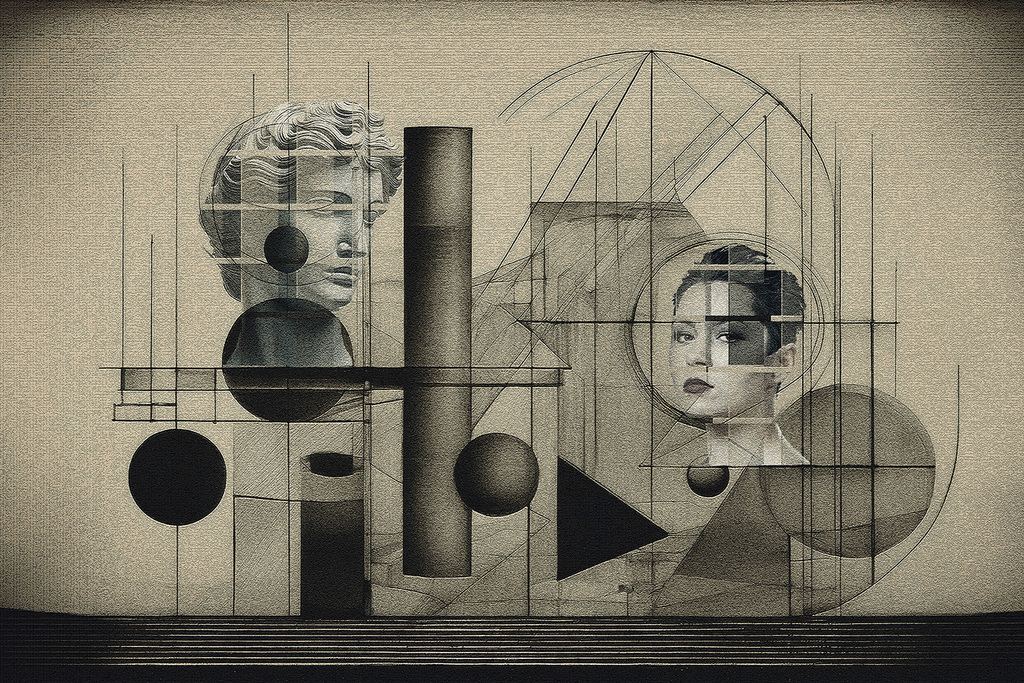
This course is dedicated to those who wish to deepen their understanding of visual language, explore traditional and digital artistic movements, and develop critical thinking in the interpretation of photographic and visual images. The programme offers an interdisciplinary approach, combining art history, visual aesthetics, and new creative technologies.

🎓 Course objectives:

  • Familiarisation with the main visual movements in photography and digital art
  • Developing the capacity to analyse and interpret images
  • Understanding the relationship between photography, digital art, and artificial intelligence
  • Building critical thinking and a solid visual vocabulary

📚 Curriculum structure:

🔵 Semester I — Visual Movements and Photography

  • Study of photographic movements: pictorialism, modernism, photorealism, documentarism, street photography
  • Introduction to visual postmodernism and image criticism
  • Exploration of digital art movements: Net Art, Glitch Art, Pixel Art

🔵 Semester II — Digital Art, AI and Critical Analysis

  • Analysis of generative art and AI-assisted visual creation
  • Comparing AI art with photography and traditional art
  • Study of creativity in photography and digital art
  • Analysis of composition in the works of Henri Cartier-Bresson
  • Deconstruction of the image in contemporary art
  • Elements of visual language and applied critical thinking

🎯 Final outcome: Upon completing the course, participants will have a deep understanding of the image as a form of cultural and artistic expression, will be able to analyse and interpret complex visual works, and will have a solid theoretical foundation for developing their own visual projects.

Photography, Editing and Image Analysis — Three Essential Steps in the Formation of the Visual Artist

In a world dominated by the image, the formation of a visual artist can no longer be reduced to merely mastering a camera or editing software. It requires a deep understanding of visual language, critical thinking, and a genuine capacity to transform artistic intention into coherent expression. For this reason, in my educational programmes, the three fundamental components — photography, digital editing, and image analysis — are approached as a unified whole.

Photography — The gaze that composesThe photographic art course is the starting point. Here, students learn to see. Not merely to observe, but to decide what is worth capturing, how, and why. It is an exercise in aesthetic selection, in taking on a perspective and understanding light, composition, and space. Photography thus becomes a form of visual thinking — a first artistic gesture.

Editing — Control of expressionThe raw image, however well composed, is rarely final. Through editing, students learn to refine, accentuate, and transform. Whether using Lightroom, Photoshop, or free alternatives, they gain control over form and content. Editing is not merely technique — it is an extension of artistic intention, a process of clarifying the visual message.

Analysis — Deep understanding of the imageIn a saturated visual landscape, the capacity to interpret images becomes essential. The image analysis course provides the theoretical tools needed to understand the context, symbolism, and function of a visual work. Students learn to deconstruct the image, situate it within art history, and compare it with new forms of digital expression, including those generated by artificial intelligence.

Why all three?Because a contemporary visual artist must be simultaneously creator, editor, and interpreter. Photography provides the raw material, editing shapes it, and analysis contextualises it. Together, these three components form an educational framework that stimulates artistic autonomy, stylistic coherence, and cultural relevance.


If you are passionate about the image and wish to build a solid artistic vision, I invite you to explore these courses. Each step brings you closer to an authentic visual identity and the capacity to communicate through the image in a profound and professional way.

alt="grafic explicativ"

Drawing on the reflections developed in the study From Real to Augmented, this course extends the educational pathway dedicated to the image toward new forms of visual creation assisted by artificial intelligence.

If photography works with the real, this programme explores the way in which the image can be constructed in a digital environment, without losing the essential role of the author's intention.

4. COURSE: THE VISUAL AUTHOR IN THE AI ERA

The Image Beyond Photography

Following on from the courses dedicated to the photographic image, this programme explores new forms of visual creation in the era of artificial intelligence.

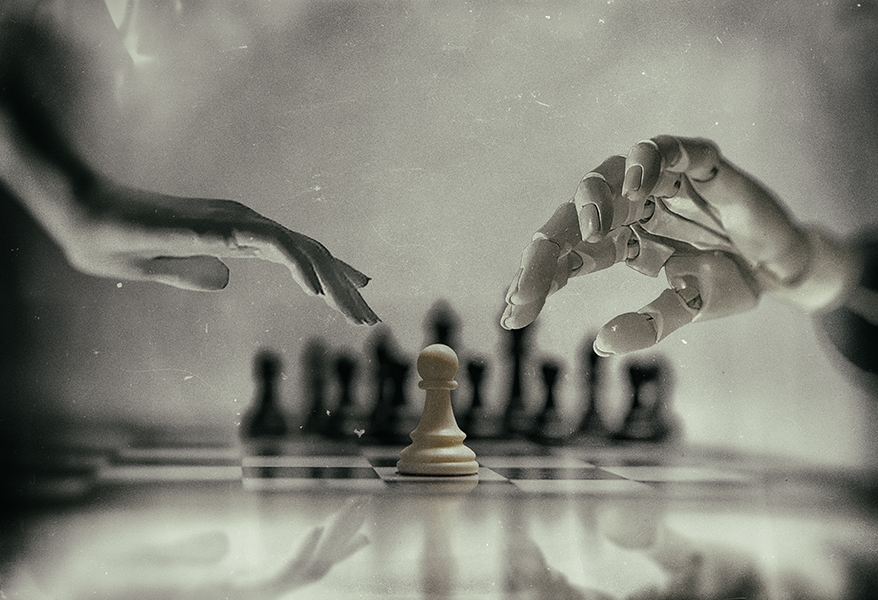
Artificial intelligence does not only change the way we produce images. It changes the role of the one who creates them.

This training programme is designed for artists, photographers, and visual creators who wish to understand and use AI not as a simple technical tool, but as a medium of creation.

This is not a course about rapid image generation. It is a working space focused on intention, message, and authorship in a context where the boundary between the real and the generated becomes increasingly fluid.


About the programme:

In a world where the image can be produced instantly, the challenge is no longer access to technology, but the construction of meaning.

The programme proposes an artistic and critical approach to the generated image, starting from the relationship between:

  • gaze
  • intention
  • algorithm

Participants will explore how AI becomes a partner in the creative process, without cancelling the role of the author.


Structure

The programme is organised into working sessions of approximately 2 hours and unfolds across two levels.


Level 1 :From Gaze to Generated Image

For: visual artists / photographers / designers / illustrators / art educators

Content:

  • the changing status of the image in the digital era
  • the relationship between attention, intention, and message
  • using AI as a medium of expression
  • building an image with meaning

Outcome: Participants will be able to create generated images that reflect a clear artistic intention.


Level 2 (H3):The Post-Photographic Author

For: visual practitioners / active artists / creators interested in developing a personal discourse

Content:

  • authorship in an algorithmic context
  • the image as process, not object
  • the difference between the aesthetic and the conceptual
  • developing a visual series

Outcome: Participants will produce a micro artistic project based on human–AI collaboration.


What this programme is NOT:

Not:

  • a software usage course
  • a rapid generation guide
  • a training oriented toward visual trends

It is a programme oriented toward:

  • visual thinking
  • message construction
  • assuming authorship

Format

  • 7 sessions
  • approximately 2 hours / session
  • practical work + conceptual reflection
  • the session schedule will be set after the group is formed, following consultation with participants, taking into account the restricted group size.


Participation requirements:

For the optimal conduct of practical activities, participation in the programme requires minimum technical conditions.

Required:

  • access to a personal laptop or computer
  • stable internet connection
  • active Adobe Photoshop account with access to generative features (generative credits available)

Participants may also use other AI visual tools, but a basic working knowledge of Photoshop facilitates the application of the exercises proposed in the course.


Who is it for:The programme is open to creators interested in exploring the relationship between art and technology, regardless of prior technical level.

Certification:Upon completing the programme, participants receive a certificate of participation.


About the trainer:

The programme is led by Flavian Savescu, visual artist and author of the volumeFrom Real to Augmented. The Visual Artist in the Post-Photographic Era — a work investigating the transformation of the creator's role in the context of human–algorithm collaboration.

His artistic practice explores the relationship between image, memory, and simulation, as well as the aesthetic and ethical implications of generative technologies.


Enrolment:

Enrolment in the programme begins with Level 1, which forms the foundation of the training pathway.

Participation requires payment of a fee, for which an invoice will be issued in accordance with applicable legislation.

Places are limited to allow for applied work and individual feedback.

After the group is formed, participants will be contacted to confirm participation and receive details regarding the venue.

link text: Apply to participate (link: /en/contact)

You will be contacted with details regarding the schedule and participation.

Apply for participation

Vei fi contactat pentru detalii privind calendarul și participarea.

The image is no longer merely captured.

It is constructed.

Participate in the programme.

Apply for participation.

The first group benefits from special participation conditions.